Sayyid Al-Hakeem: Spending as an Effect of Prayer and a Pillar of Piety and Spiritual Authority in Epistle on Rights
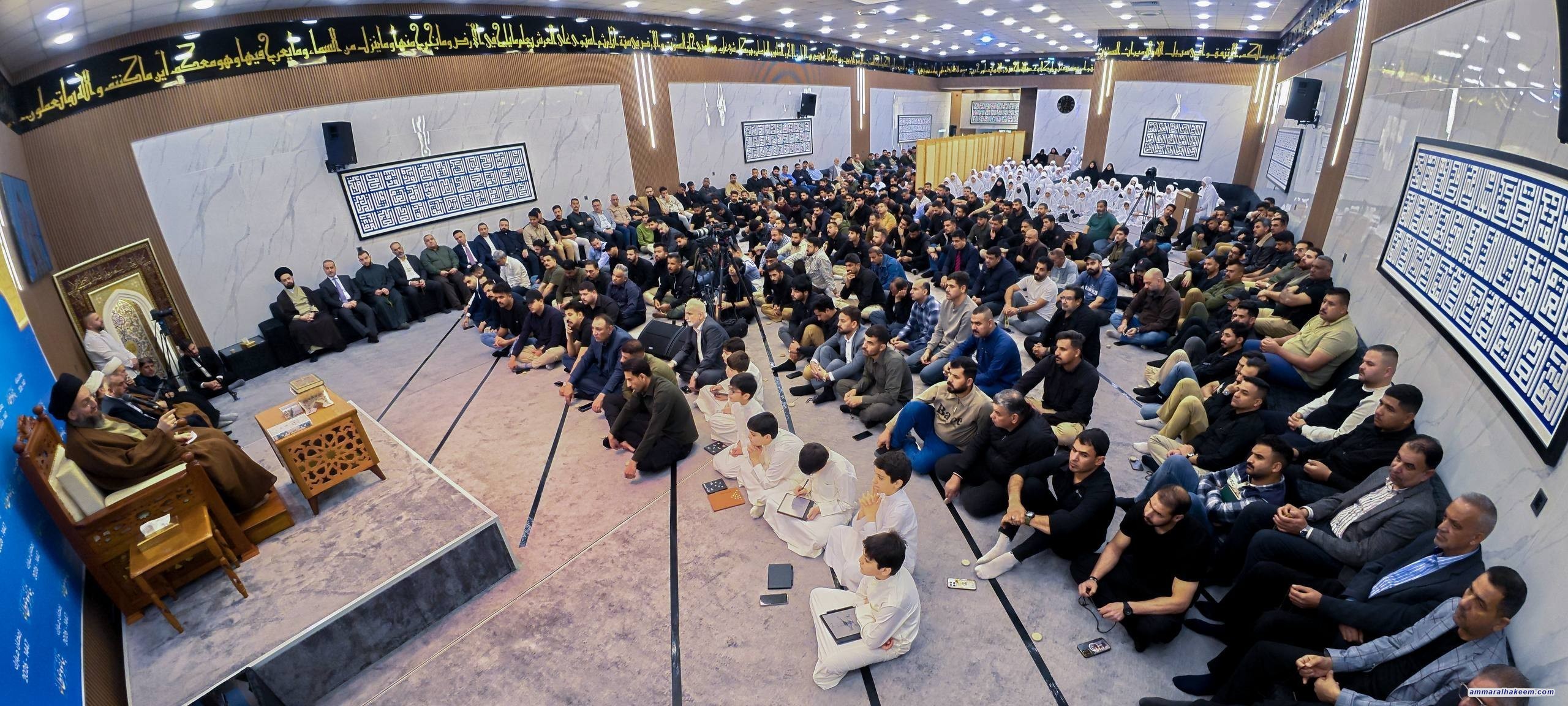
In the second Ramadan lecture on the Epistle on Rights by Imam Zain Al-Abidin Ali Ibn Al-Hussein (peace be upon him), His Eminence Sayyid Al-Hakeem, Head of the National State Powers’ Alliance, reaffirmed that this epistle encapsulates the Islamic framework for rights, organizing human relationships with oneself, with God, and with society.
Continuing his exploration of the tenth right—the right of prayer—H.E. moved from the fourteenth effect of prayer to the fifteenth: spending (charity). This concept is reflected in the Holy Quran, Surah Al-Baqarah, verses 2–3:
“This is the Book about which there is no doubt, a guidance for the righteous, who believe in the unseen, establish prayer, and spend from what We have provided them.” (2–3:02 Holy Quran)
H.E. explained that spending is considered an effect of prayer because human nature tends toward attachment to wealth, status, and accumulation, which often prevents generosity. Prayerful individuals, however, overcome these barriers and are able to spend for the sake of God. The Holy Quran further reinforces this in verses 19–23 of Surah Al-Ma’arij:
“Indeed, mankind was created anxious; when evil touches him, he is impatient, and when good touches him, he is withholding—except for those who establish prayer, who are constant in their prayers, and in whose wealth there is a recognized right for the beggar and the deprived.”
H.E. emphasized that prayer and spending are core pillars of piety, serving as essential prerequisites for attaining spiritual authority (wilayah), as noted in Surah Al-Ma’idah (55):
“Your guardians are only Allah, His Messenger, and those who believe, who establish prayer and give zakah while bowing.”
These two pillars are detested by hypocrites, as stated in Surah At-Tawbah (54):
“They come to prayer lazily and spend reluctantly.”
Neglecting them, H.E. stressed, leads to spiritual downfall and jeopardizes salvation.
Regarding the phrase “and spend from what We have provided them,” H.E. highlighted several key principles:
Moderation in spending, avoiding both stinginess and extravagance, as noted in Surah Al-Isra (29): “Do not make your hand chained to your neck, nor stretch it fully, or you will sit blamed and destitute.”
Recognition of God as the ultimate owner, Humans are stewards of their wealth, fostering humility and preventing arrogance (Surah An-Nahl 53: “Whatever blessing you have is from Allah.”).
Charity must come from halal earnings (Surah Al-Baqarah 267: “O you who believe, spend from the good things you have earned.”).
Generosity should extend to all forms of wealth, not just select assets.
Spending should correspond to one’s sustenance; as provision increases, so should giving.


