Sayyid Al-Hakeem: Iraq Faces Responsibility to Manage Its Political, Economic, Security Files After International Coalition Exit
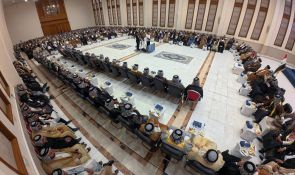
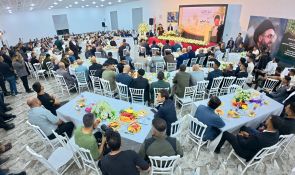
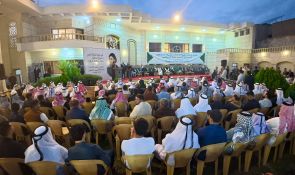
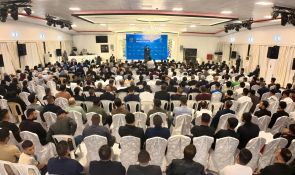
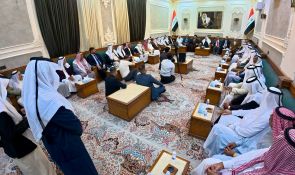
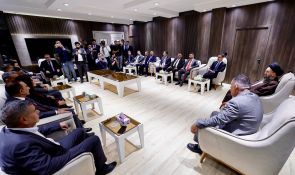
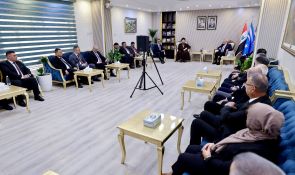
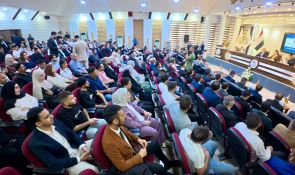
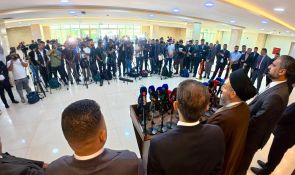
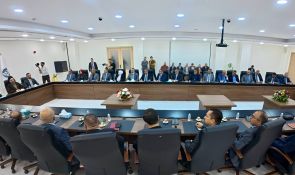
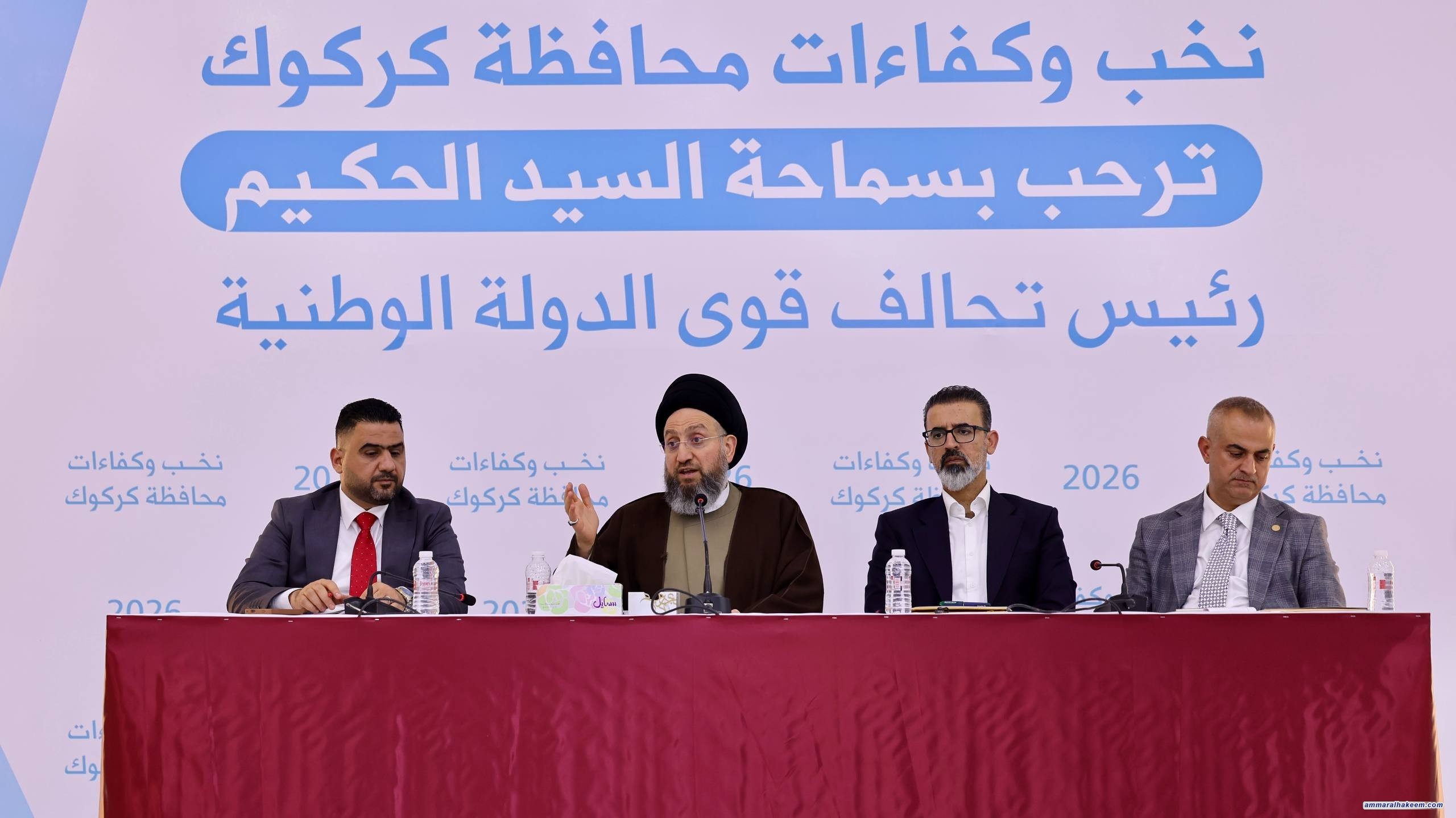
At the conclusion of the first day of the visit to Kirkuk Governorate, His Eminence Sayyid Al-Hakeem, Head of the National State Powers’ Alliance, met with a gathering of the governorate’s elites and talents from various specializations, affirming that Kirkuk is a symbol of coexistence and of religious, sectarian, and national diversity, explaining that Iraq has faced security, political, and social challenges, noting that it suffers today from an economic challenge, regarding differences of opinion and viewpoints as natural in a country the size of Iraq, stressing the diversification of Iraqi oil export outlets and raising production in line with Iraq’s potential and population size, along with the importance of diversifying the economy and activating the agriculture, industry, tourism, investment, and modern technology sectors, and drawing attention to the importance of dedicating oil resources to future generations, strategic projects, and infrastructure.
H.E. regarded the end of the mission of the International Coalition to Combat Terrorism in Iraq as evidence of recovery, explaining the importance of Iraq shouldering the responsibility of managing its own affairs without needing others, at the political, economic, and social levels, in international relations, and at the intelligence level in tracking the terrorist ISIS organization and eliminating its sleeper cells, and affirming that the exit of the International Coalition has achieved full sovereignty and ended the state of tutelage over Iraq.
H.E. explained that Iraq faces a security challenge represented by pursuing ISIS cells inside the country and coordinating joint security work with the countries of the region and the world, urging the security agencies to fill the vacuum left by the exit of the International Coalition and to cut off the organization’s chance to catch its breath, whether inside Iraq or by crossing from beyond the borders, and stressing the equation of “neither underestimation nor exaggeration” in dealing with terrorism.
H.E. called for internal cohesion and unity of ranks, sending messages of reassurance among the components, and strengthening partnership and deliberation on the key files in order to reach an Iraq for everyone, as well as for tangible steps to reassure the components, and for addressing the problem of weapons outside the framework of the state, including all factions and groups to which the description of weapons outside the framework of the state applies, reminding that the Iraqi Constitution stipulates that Iraq may not be a corridor or a base for threatening neighboring countries, valuing all the efforts made in fighting ISIS, including the efforts of the honorable factions and the long list of martyrs who sacrificed for the restoration of the state, and regarding September 30 as the starting line for addressing the problem, extending to June 30 of next year.
H.E. affirmed the representation of the Turkmen in the federal government, explaining that the fuel crisis is part of a crisis the region is going through in terms of oil production or its import, which created a problem in imports, and explaining that the change in the exchange rate came as a result of a recommendation from the World Bank and the Central Bank to change the rate to keep pace with the reform path, affirming that the Central Bank is capable of absorbing demand and bringing prices back to their normal level, stressing closing the gap between the official rate and the market rate, and calling for policies that protect the vulnerable class in society through the ration card, health insurance, fuel, and other measures.
H.E. explained the government’s orientation toward adopting a budget based on programs and priorities, noting its orientation toward supporting the poorest governorates such as Salah Al-Din and Diwaniyah, followed by the rest of the governorates, drawing attention to the government’s priority for electricity and
higher education and for resolving the difficult electricity problem that Iraq has suffered from, affirming that the parliamentary system imposes a coalition of political forces, and stressing the nomination of competent names capable of carrying out the task.